
How to Check Criminal History in Dawsonville
Start a Dawsonville criminal history search by naming the record, the event, and the agency. Sheriff deputies create city police reports because Dawsonville does not operate a separate police department. The Dawsonville City Clerk holds city administrative material and is the public counter for municipal court questions. The Dawson County detention and court systems hold booking and prosecution records. Georgia Crime Information Center, or GCIC, maintains the state criminal history repository.
Use exact names and a narrow date range. A citation number, incident number, or court case number can keep similar names apart. Save each response so dates and identifiers can be compared across custodians. No single Dawsonville portal merges every layer.
- Read the citation, exchange sheet, or release paper for the agency and court names.
- Request a deputy-created incident or arrest report from the Dawson County Sheriff's Office Records unit.
- Call the Dawsonville City Clerk for a municipal citation or ordinance case.
- Check the county jail and court channels for a booking or state-law prosecution.
- Use an official GCIC history when the inquiry must extend beyond Dawsonville and Dawson County.
Why Dawsonville Has No Police Desk
Dawsonville's official department list names Administration, Planning and Zoning, Public Works, and Utilities, but no police department. A 2023 intergovernmental agreement explains that the city lacked the staff, equipment, and resources for an independent force and paid Dawson County for sheriff services inside city limits. City retreat minutes from February 2025 discussed a possible small city force. A discussion did not create an operating department or a new records office.
The city government department list gives the clearest current routing clue. The screenshot below shows that city structure. It supports the practical rule: send police report requests to DCSO, not to an assumed Dawsonville police records desk.
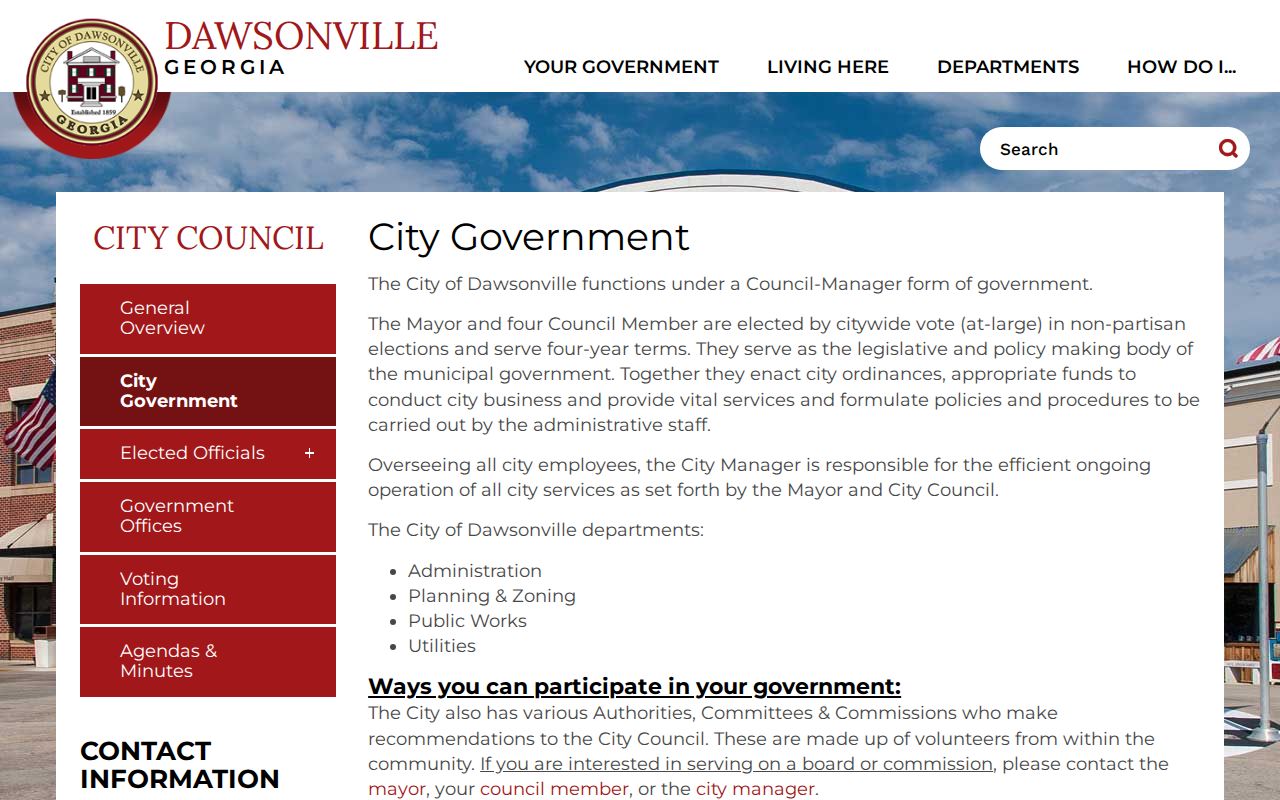
The absence of a department is not an absence of police records. It changes the custodian. Dawson County deputies still document calls, incidents, and arrests within the incorporated city.
The Dawsonville Police Department
There is no independent Dawsonville Police Department to contact. The correct law-enforcement record holder is the Dawson County Sheriff's Office at 19 Tucker Avenue, Dawsonville, Georgia 30534. Its main number is 706-344-3535, and published lobby hours are weekdays from 8 a.m. to 5 p.m. The sheriff's written request process asks for the event date and time, the requested record, requester contact and return details, involved person's name and role, location, and case number when known.
DCSO states that it aims to complete open-record requests within three business days, excluding holidays. That is a service goal, not a promise that every file will be released in full. Active-investigation material, juvenile information, protected victim details, and other exempt material may be withheld or redacted.
Dawson County Sheriff's Office
19 Tucker Avenue
Dawsonville, GA 30534
706-344-3535
Monday-Friday, 8 a.m.-5 p.m.
Dawsonville City Clerk
415 Highway 53 East, Suite 100
Dawsonville, GA 30534
706-265-3256
Monday-Friday, 8 a.m.-4:30 p.m.
Dawsonville's Record Custodian Test
The place where an event happened does not always hold its record. Ask who created the file. City Hall keeps council, finance, ordinance, and other municipal administrative records. DCSO keeps its incident, offense, and arrest reports. Georgia State Patrol records belong to the Georgia Department of Public Safety. Court clerks maintain case filings and dispositions.
| Needed record | Start here | Useful detail |
|---|---|---|
| Deputy incident or arrest report | Dawson County Sheriff Records | Incident date, place, names, case number |
| City administrative record | Dawsonville City Clerk | Narrow subject and date range |
| Municipal citation outcome | City Clerk or Municipal Court counter | Defendant, citation number, court date |
| Trooper crash or incident | Georgia DPS Open Records Unit | Crash date, location, report number |
This split saves time. It also prevents a City open-records request from being mistaken for a request for a sheriff-created police narrative.
When a request spans more than one custodian, submit a separate, focused description to each office. For example, ask DCSO for the incident narrative and ask the court clerk for the final disposition. Do not ask City Hall for “all records” tied to a name when the likely files were made by county officers. Separate requests make it easier for each Dawsonville-area office to identify its own responsive material, estimate lawful costs, and explain any redaction or exemption.
Arrests and Bookings in Dawsonville
A deputy who makes a Dawsonville arrest may create an incident or arrest report and transport the person to the Dawson County Detention Center. Intake produces a separate booking record. Staff establish identity, inventory property, take a booking photograph and fingerprints, record the arresting agency and charges, complete screening, and assign housing. Court officials then handle first appearance and bond. These records do not become one file merely because they arise from one event.
The official DCSO detention page links to “View Current Inmates.” It answers present-custody questions, not every past Dawsonville arrest. When the roster does not resolve the question, call the detention center, visit the lobby, or use the sheriff's records request. A transfer to state prison shifts custody lookup to Georgia Department of Corrections Offender Search. Charges shown during booking remain allegations unless a court enters a conviction.
Using Dawsonville's Records Form
The Dawsonville Open Records Request page routes City-created records through the clerk. The official form asks the requester to describe the material with enough detail to locate it and supplies the City Hall channel. No public account, posted report price, or online municipal case search was found in the official material reviewed. Ask for a cost estimate before a broad request.
The source view below shows the City's instructions and counter information.
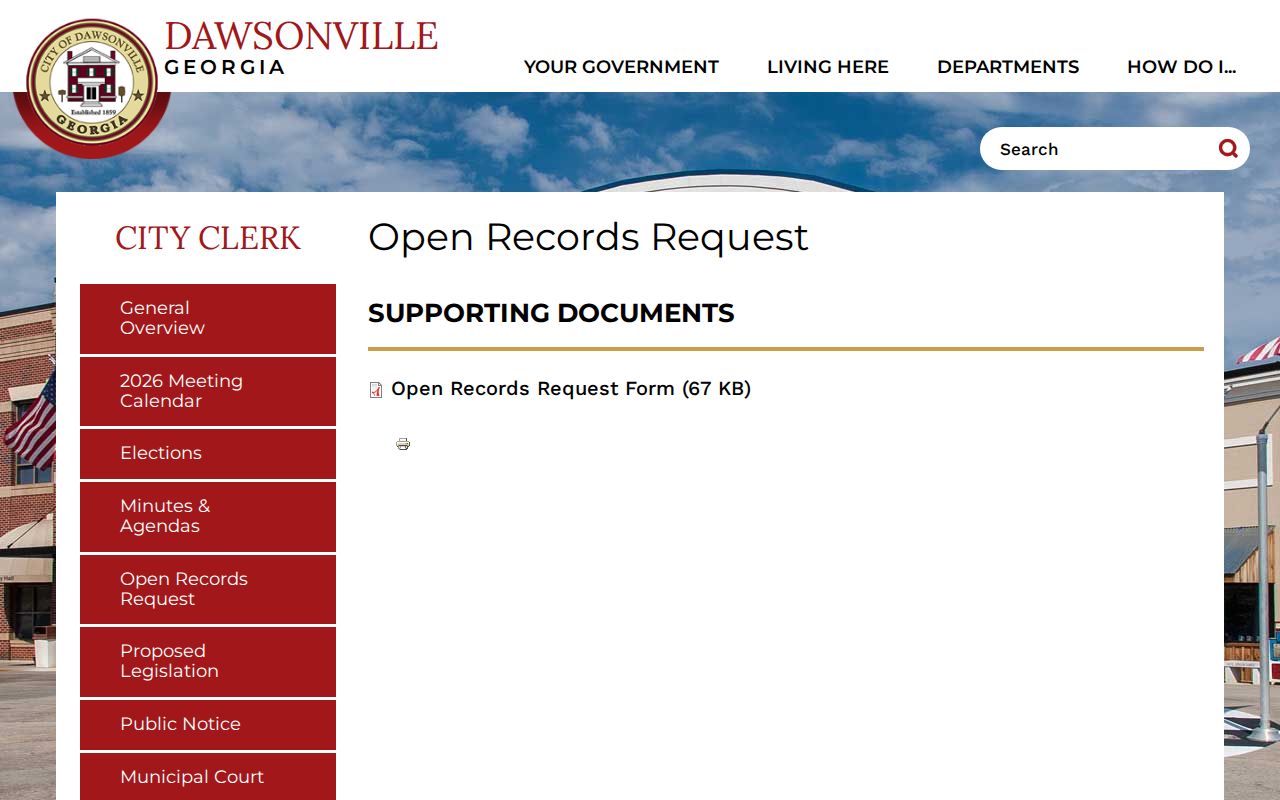
Use the city form for a City record. For police files, the city location of the event does not displace DCSO as the law-enforcement custodian.
A precise Dawsonville request should name the subject, describe the document, and give a practical date span. State whether electronic delivery is acceptable and ask the clerk to advise before costs exceed a chosen amount. Keep the submission and the response together. If the City says another office owns the record, use that answer to redirect the request instead of treating it as proof that no record exists.
Dawsonville Municipal Court Records
Dawsonville's site places Municipal Court within the City Clerk function, but it did not expose a working public case-search page, a fee table, or a detailed court calendar during research. The dependable route is the City Hall counter or 706-265-3256. Give the defendant's full name, citation number if available, alleged violation, and an approximate citation or court date. Ask the clerk to confirm that the matter belongs to municipal court.
| Court Name | Dawsonville Municipal Court, contacted through the City Clerk |
|---|---|
| Case Types Heard | City ordinance and qualifying traffic or fine-only matters within municipal jurisdiction |
| Case Lookup Channel | Telephone or counter inquiry; no official public search interface was located |
| Helpful Search Details | Full legal name, citation or case number, alleged violation, and approximate date |
| Copies and Fees | Ask the clerk for current availability, delivery methods, and cost; no official fee was found |
Municipal court is not Dawson Superior Court. Felonies and other county or state criminal prosecutions follow the appropriate Dawson County court route.
Read the face of the citation before calling. It may identify the issuing officer, charge, appearance date, and named court. Those details help the clerk distinguish a municipal ordinance matter from a state-law case. If no Dawsonville municipal file is found, check whether Magistrate Court handled an early warrant or hearing and whether Superior Court received a later accusation or indictment. The court that holds the filed case, not the place name alone, supplies the authoritative disposition.
Dawsonville City Hall Records Counter
City Hall at 415 Highway 53 East, Suite 100, is the Dawsonville administrative record counter. The clerk can receive a City public-record request and help identify municipal court routing. Published hours are Monday through Friday, 8 a.m. to 4:30 p.m. The clerk email listed by the City is clerk@dawsonville-ga.gov.
The official Dawsonville City Clerk page identifies the clerk's public-record role, as captured here.
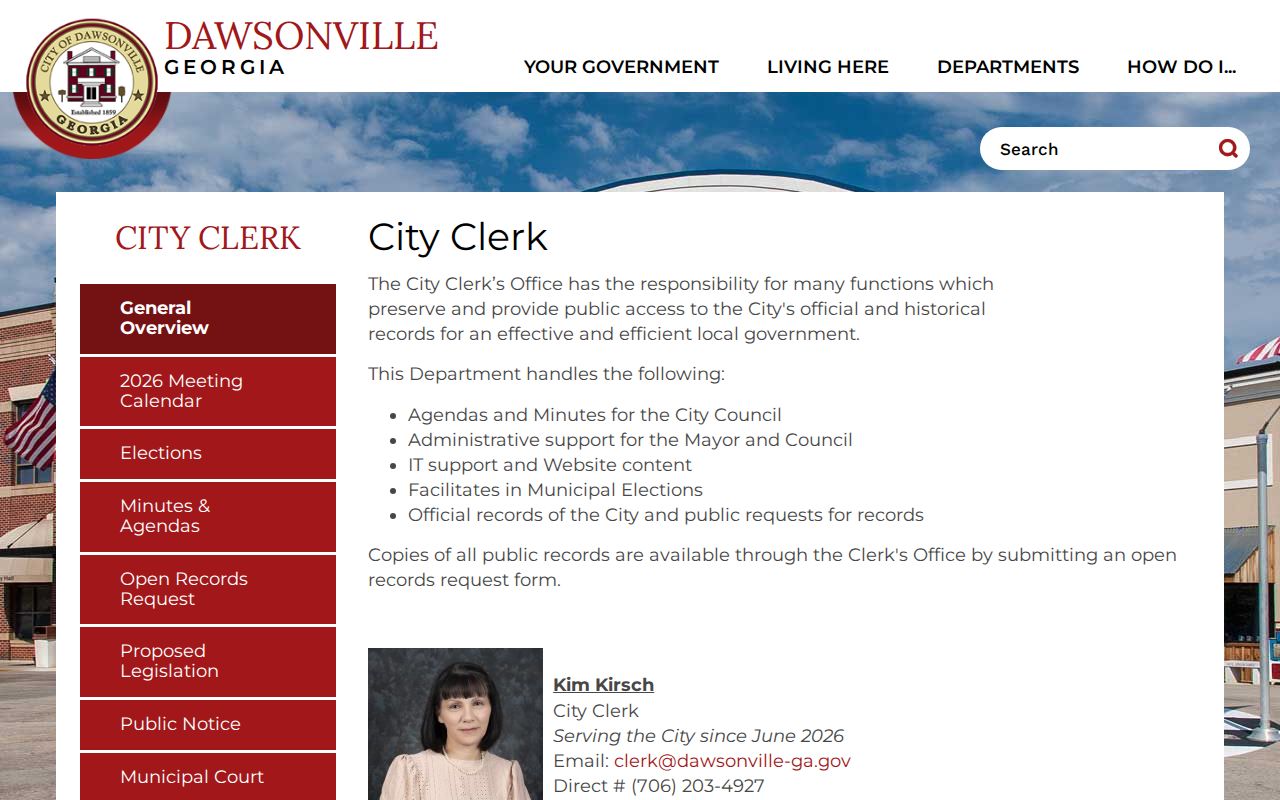
City Hall can identify a City file, but it should not be used as a substitute for the sheriff, detention center, or county court clerk.
Where Dawsonville Records End Up
A Dawsonville event can leave several official traces. The sheriff creates the incident report. The detention center creates a booking record when a person enters custody. A municipal or county court creates the docket, orders, and final disposition. Fingerprint-supported arrest and disposition data can flow to GCIC under Georgia reporting rules.
Record flow: Dawson County Sheriff's Office › Dawson County Courts › Georgia Crime Information Center
The chain is not automatic proof that every screen is current or complete. A recent incident may not yet have a filed case. A municipal citation may never belong in Superior Court. A state history may need correction if the final disposition was not matched to the arrest. Compare the case number, date, charge, and disposition across the proper sources.
Timing matters as well. A deputy's report can exist before a prosecutor decides what to file. A jail entry can end after release while the court case continues. Later, a dismissal, plea, trial result, or sentence becomes part of the court record and may be reported to GCIC. Anyone reviewing their own Dawsonville history should obtain the actual disposition when an arrest entry lacks its outcome, then use Georgia's correction or restriction process if the state record is incomplete or eligible for relief.
Dawsonville Addresses Can Mislead
Dawsonville is Dawson County's only incorporated city, but the name also appears in postal addresses outside city limits. The 2020 Census counted 3,720 city residents. A City Manager estimate reported 4,324 for 2024. Those figures use different methods and dates, so they should not be merged. More important for a record search, a mailing city does not establish police or court jurisdiction.
The City's community page supplies the official local setting shown below.
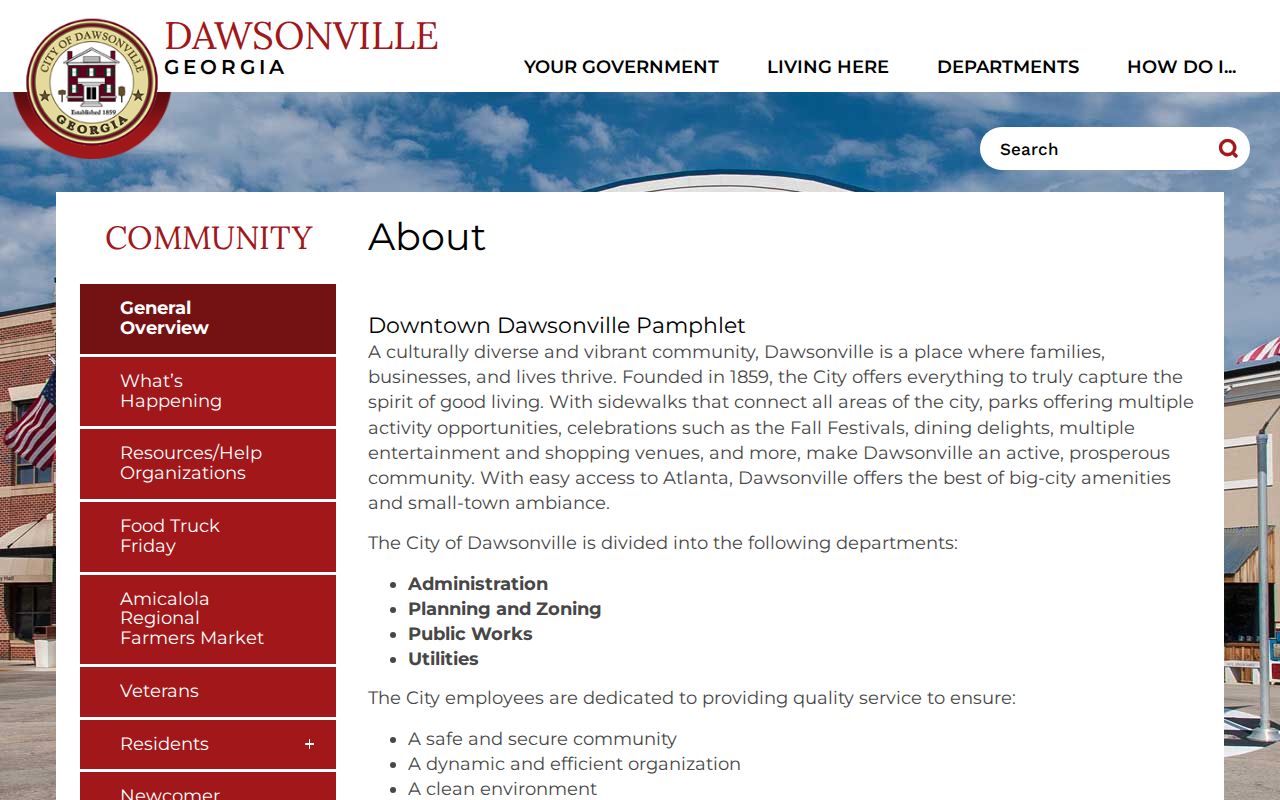
Use the responding agency and the court named on the paperwork. County crime totals also must not be recast as Dawsonville-only statistics.
Dawsonville Records Across Time
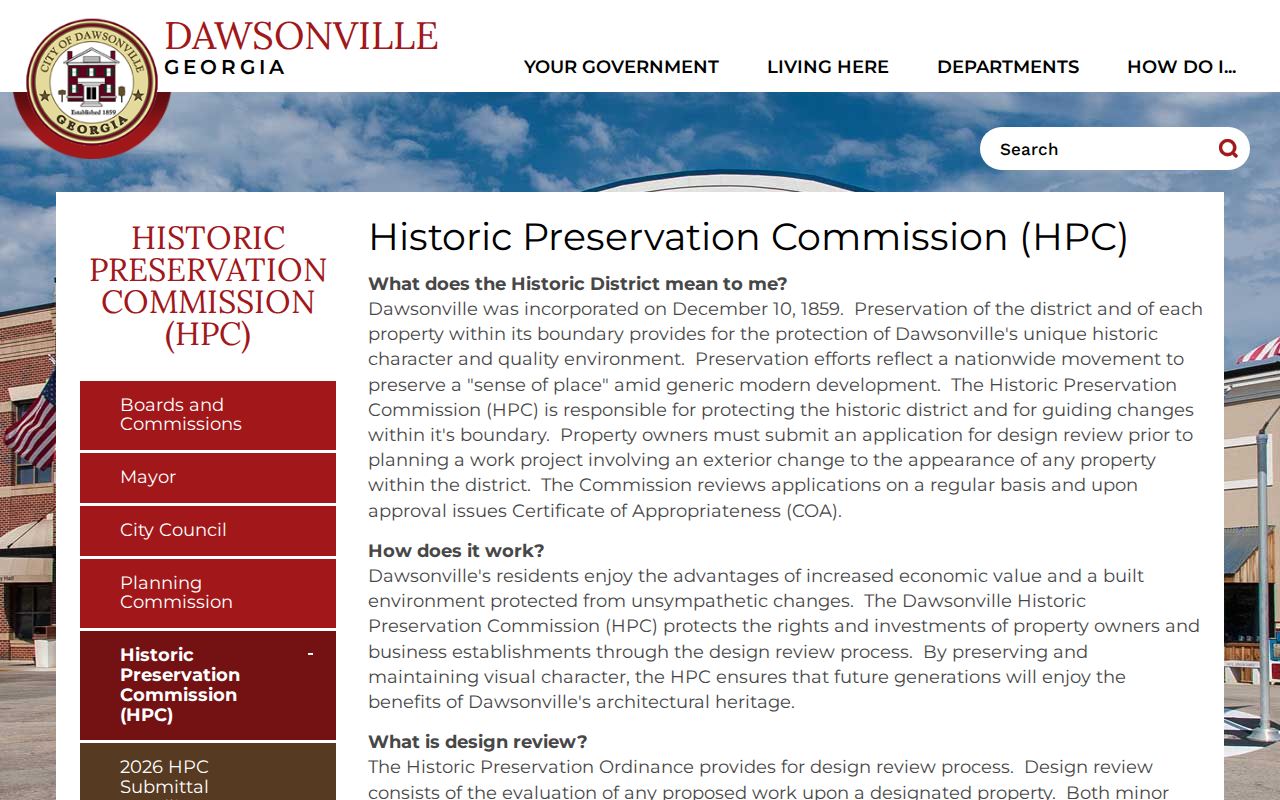
Dawsonville was incorporated on December 10, 1859. Its historic-preservation work emphasizes the downtown area's distinct sense of place. Modern record custody, however, follows current government functions rather than local history alone. City Hall keeps municipal business, while county offices provide police, detention, and major court services.
The Dawsonville Historic Preservation Commission page documents that civic context.
Older records may require a counter request when no online image exists. State criminal history, court files, and city archives also have different retention and access rules.
Public Access Rules
The Georgia Open Records Act begins with a presumption that public records may be inspected, subject to exemptions. Agencies may charge lawful copy or media costs and qualified staff time after the first 15 minutes. A request should be narrow enough to identify the file. The custodian may redact protected information rather than release an entire unedited report.
Key Statutes:
O.C.G.A. §§ 50-18-70 through 50-18-77 govern requests, response duties, lawful costs, and exemptions.
O.C.G.A. § 35-3-34 controls dissemination of Georgia criminal history information, including limited public felony-conviction access.
O.C.G.A. § 35-3-37 provides review, correction, and record-restriction procedures for eligible arrest information.
Juvenile data, active-investigation content, victim and minor identifiers, security information, and restricted or sealed records can remain unavailable. A missing result is not proof that an event never occurred. Confirm identity and final disposition with the office holding the original Dawsonville or Dawson County record.